


What Prince's Estate Teaches Us
Prince died without a will or trust, leaving years of court battles. See how a revocable trust avoids probate, cost, and public exposure.
What Prince's Estate Teaches Us
Prince died without a will or trust, leaving years of court battles. See how a revocable trust avoids probate, cost, and public exposure.

Prince died without a will or a trust. He left behind an estimated $200 million with no instructions attached. More than a decade later, people are still writing about it: the years of court battles, competing heirs, and every filing sitting in public record for anyone to read.
That's the part worth sitting with. Not that it happened, but how long it kept happening, in full view of the public, all because one document was never created.
Good to know: the revocable trust
A revocable trust lets you place your assets, home, investments, everything, into a trust you control during your lifetime. You can manage it, change it, or undo it entirely, as long as you're mentally competent. Nothing locks you in. That's the "revocable" part.
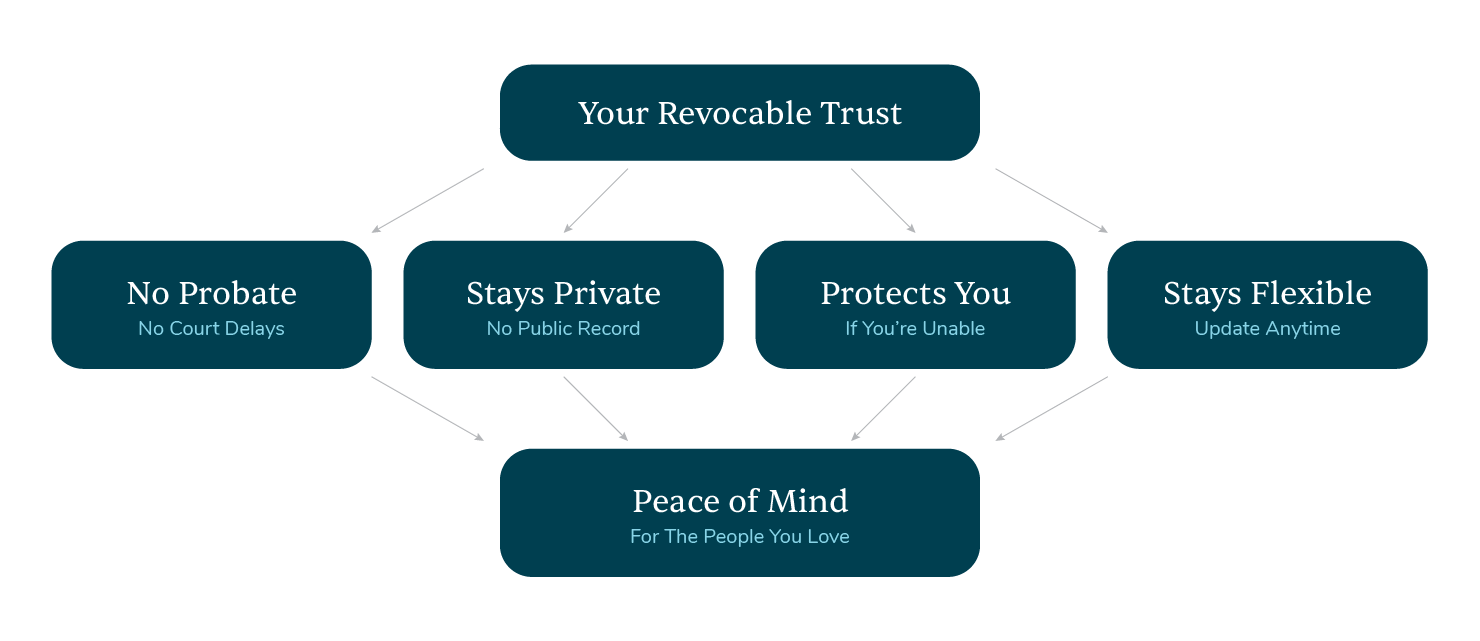
Four reasons attorneys point to it so often:
- No probate. A will typically has to go through probate, the court process that confirms it's valid before anything gets distributed. That can take months or years, and it costs money along the way. A properly funded trust skips it entirely.
- Stays private. A will becomes public record once it enters probate. Anyone can read what you owned and who you left it to. A trust isn't filed with any court. It stays private, the way Prince's estate never got to.
- Covers incapacity, not just death. If a stroke, accident, or illness leaves you unable to manage your affairs, your named successor trustee can step in immediately. No guardianship hearing, no waiting on a judge.
- Stays flexible. Life changes. A trust can be updated anytime, no courtroom required.
Making it real
The Delgados set up a trust in their 50s. When Mr. Delgado had a heart attack years later, his named successor trustee, his daughter, simply stepped in and managed things. No court filing, no public record. When he passed, the trust's assets moved directly to his family, privately, exactly as he'd planned it.
The short version
A will is like reading your diary out loud in a courtroom after you're gone. A trust is like keeping that diary in your own desk drawer, with clear instructions for someone you trust to handle it quietly.
Ask yourself: if something happened tomorrow, would your family's next steps already be private and planned, or would they be figuring it out in a courtroom?
That's what FeedingBird helps you build. A trust that's actually working when your family needs it, someone you trust already in place if life knocks you down for a while, and a plan you can update whenever things change. Private, flexible, ready.